
Robotic-assisted knee replacement
A worn knee, planned and replaced with robotic assistance, then rebuilt in physiotherapy.
- Often about 1–2 hours.
- Spinal, epidural or general, decided with the anaesthesia team.
- Often a short hospital stay. The exact nights are planned for you.
- Walking with support is the early goal. Full confidence takes months.
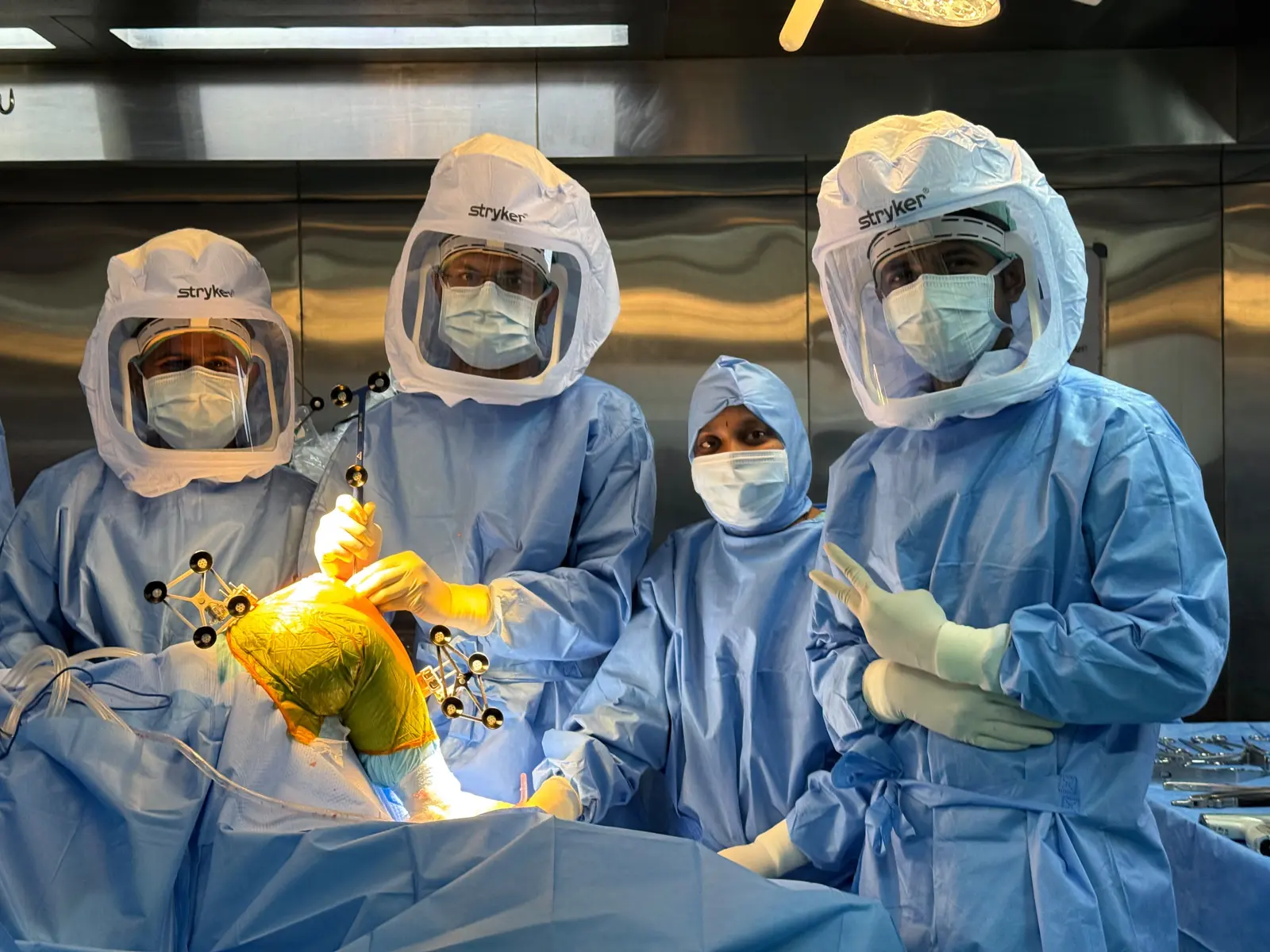
What is it?
In a knee replacement the damaged surfaces of the thigh bone and shin bone are capped with an implant so the joint can bend and bear weight again. Robotic assistance is used to plan the position and to guide bone preparation. The surgeon performs the operation.
Symptoms, causes, who it may help
Symptoms
- Knee pain on walking, stairs, or at night.
- Stiffness, swelling, or a knee that bows or locks.
- Pain tablets and exercise no longer let you do ordinary things.
Causes
- Osteoarthritis is the usual reason.
- Earlier fracture, inflammatory arthritis, or a long-standing deformity can also wear the joint.
Who it may help
- People whose knee pain and X-ray changes match, and who have already tried proper non-surgical care.
- Not a decision from a scan alone. The examination comes first.
How it is assessed
- exam
- Watch you walk, feel the knee, and measure how far it bends.
- xray
- Digital X-ray is in room 3. Standing views show the joint space.
- mri
- MRI is not routine before a straightforward replacement. It is used when the diagnosis is unclear, and can be done at any scan centre convenient for you.
- clinic
- You will see the models on the consultation desk and a plain explanation of what an implant replaces.
Treatment options
| Option | Without surgery | With surgery |
|---|---|---|
| First line for many painful knees. Weight advice, walking aid, strengthening. | Not an operation. | |
| If this still lets you live as you need to, replacement can wait. | ||
| A joint injection may quiet a flare. It does not rebuild cartilage. | Not a replacement. | |
| Considered when the options above are not enough. | The worn surfaces are replaced. Robotic assistance guides planning and bone preparation. | |
The procedure, step by step
- 01
Plan
Your X-rays and the examination decide the implant and the alignment target.
- 02
Anaesthesia and positioning
You are made comfortable and the leg is prepared. Trackers may be fixed to the bone so the system can see the knee.
- 03
Bone preparation
The surgeon removes the worn surface with a guided handpiece, within the plan.
- 04
Implant and closure
Trial parts check the bend and the balance. The final implant is seated and the wound is closed.
- 05
First steps
Physiotherapy starts the movement plan, often the same day or the next.
How robotic assistance helps
3D planning
The knee is mapped so the cuts have a target before they are made.
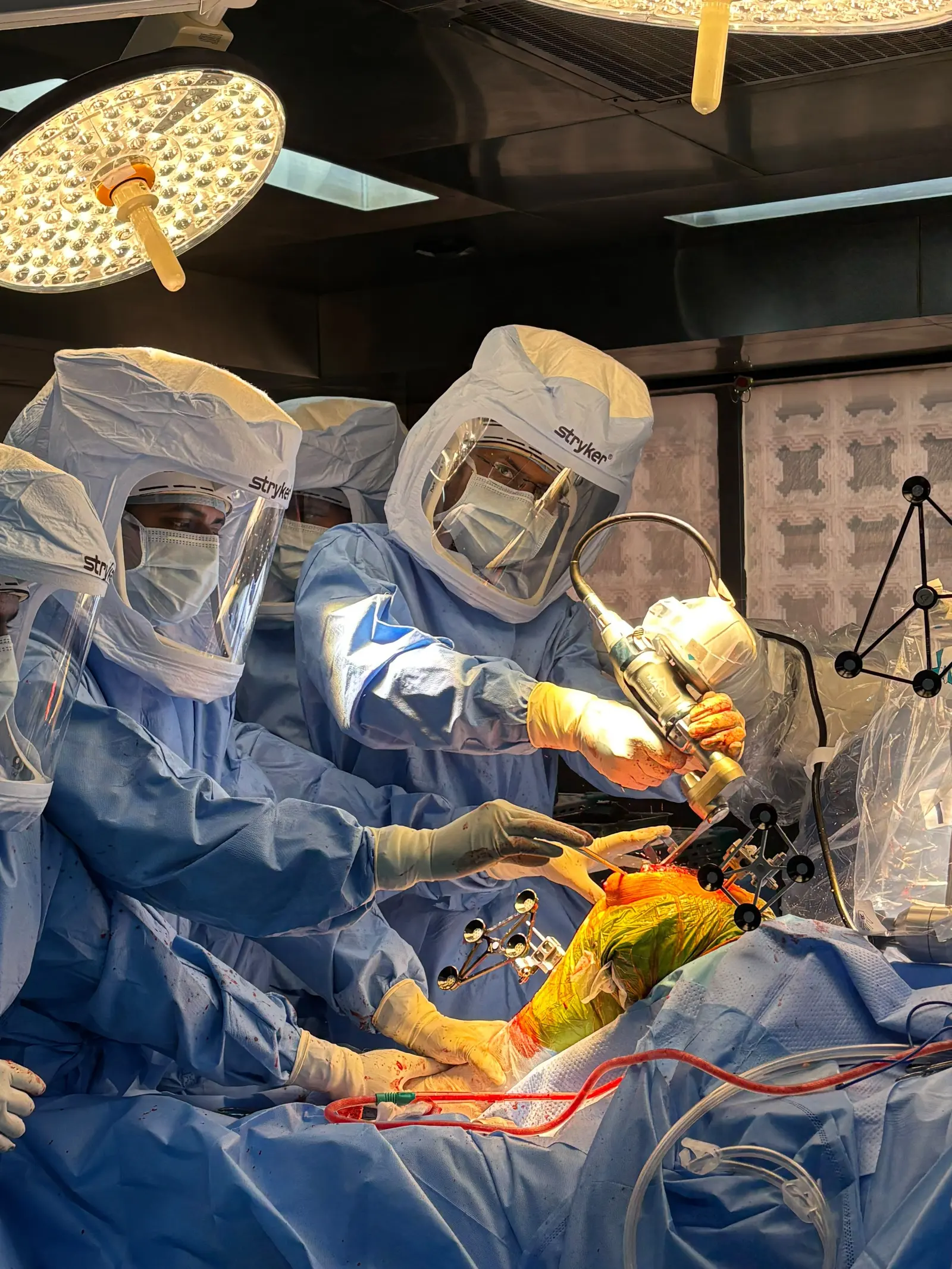
Assisted bone preparation
Optical markers and a guided tool help the surgeon prepare the bone. The surgeon does not hand the operation to a machine.
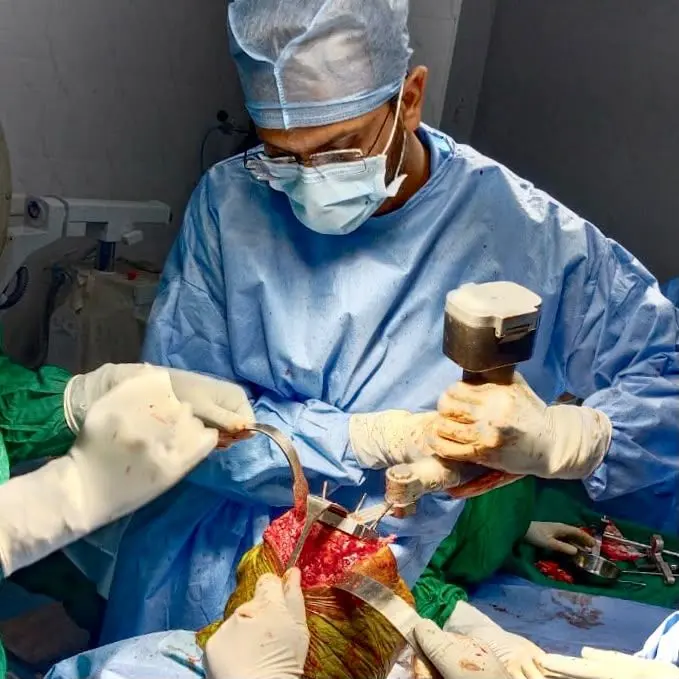
Precise implant placement
The implant is placed to match the plan, then checked by eye and by the tracker.
Recovery roadmap
You can: Sit up and, for most people, stand with help.
Avoid: Twisting the operated leg. Walking without the aid you were given.
Do, do not, and when to call
Do
- Use the walking aid until you are told to leave it.
- Do the home exercises every day.
- Keep the wound clean and dry as instructed.
Do not
- Do not soak the wound until it is sealed.
- Do not twist on the new knee to get out of a car.
- Do not compare your week-two knee with someone else’s month-six knee.
Call the clinic
- Fever, a wound that opens, or pus.
- Calf pain and swelling, chest pain, or sudden breathlessness.
- A leg or arm that becomes numb, cold, or impossible to move.
- Pain that is far beyond the plan you were given.
Risks and honest expectations
- Infection, bleeding, clots, stiffness, and anaesthesia reactions are possible with any operation.
- A good result still needs physiotherapy. The operation is one part of the recovery.
- The knee can remain stiff if bending work is skipped. Implants can loosen or wear over many years.
The aim is a knee that walks for ordinary life with less pain. It is not a promise of a teenage joint, and this clinic does not publish a success percentage.
See it
Mako robotic-assisted knee replacement in the operating theatre.
Robotic-assisted bone preparation for a knee replacement.
The robotic surgery team.
At the clinic
X-ray room 3 at the clinic.
Questions
No. Robotic assistance plans and guides. Dr. Balagangadhara performs the surgery.