Fracture and trauma care
A broken bone set in a way that it can heal straight, with a plan you can follow at home.
- Depends on the bone and the fixation.
- Chosen for the injury and your health.
- Some injuries are treated and reviewed from the clinic. Others need a hospital.
- A bone needs time to unite. The calendar is set after the X-ray.
What is it?
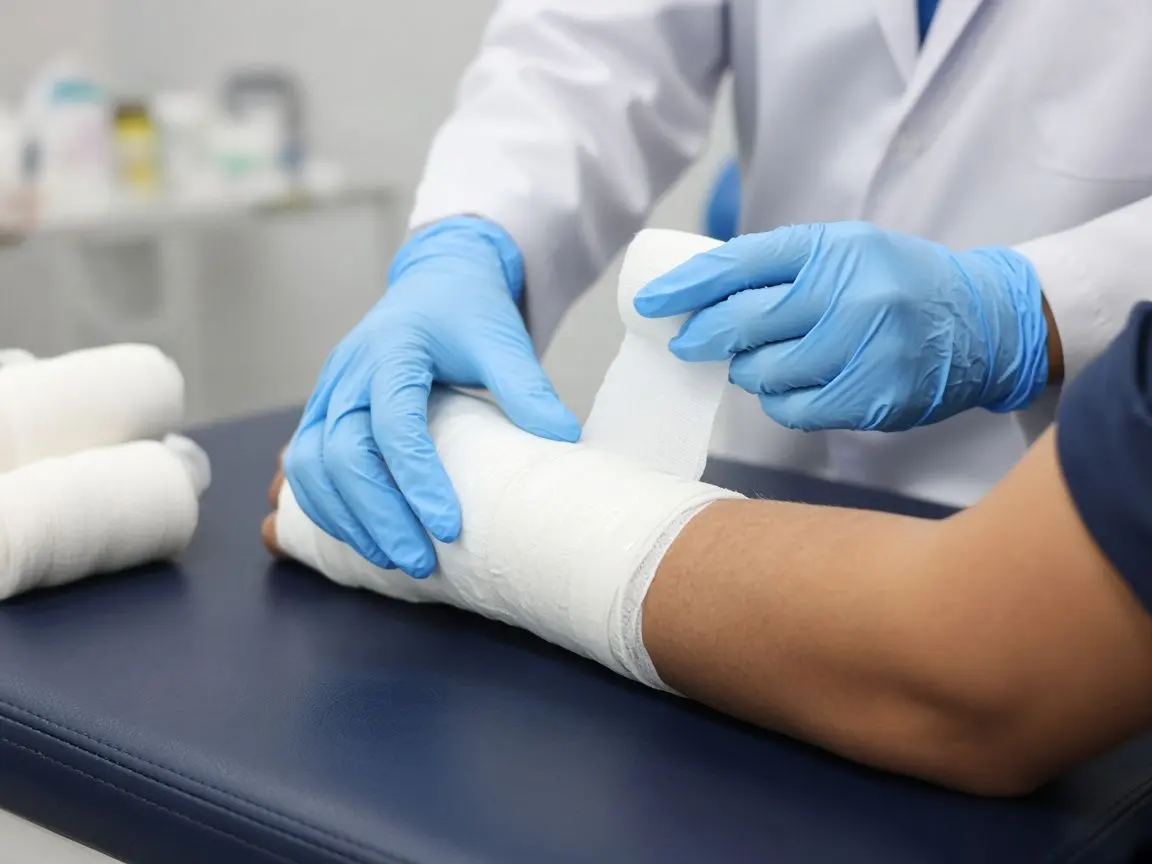
Fracture care may be a cast, a sling, or an operation with a plate, a nail, screws, or an external frame. The choice depends on which bone, the break, the skin, and your health. Open wounds and frames are shown on this page only after you choose to see surgical images.
Symptoms, causes, who it may help
Symptoms
- Pain, swelling, and inability to use the limb after a fall or crash.
- A wound over a broken bone is urgent.
Causes
- Falls, road injuries, and sport.
Who it may help
- Children and adults.
How it is assessed
- exam
- The limb, the skin, the pulse, and the feeling in the fingers or toes.
- xray
- Digital X-ray in room 3. More than one view.
- mri
- Rarely needed on day one. Used for some hidden injuries.
- clinic
- Call first for a fresh injury so dressings and the X-ray room can be ready.
Treatment options
| Option | Without surgery | With surgery |
|---|---|---|
| Many stable breaks. | No metal. | |
| The cast is not the whole treatment. The X-ray check after a few days matters. | ||
| When a cast cannot hold the break or the skin is threatened. | Plate, nail, screws, or an external frame. | |
The procedure, step by step
- 01
Align
The bone is put back into a position that can heal usefully.
- 02
Hold
Cast, plate, nail or frame. The picture on this page is a diagram, not your X-ray.
- 03
Check
An X-ray confirms the position. A later X-ray confirms healing.
- 04
Move what is safe
Joints above and below are moved early so they do not stiffen.
Recovery roadmap
You can: Pain control, elevation, and a check of fingers or toes.
Avoid: Hanging the limb down for long periods.
Do, do not, and when to call
Do
- Elevate.
- Move the fingers or toes.
- Come for the planned X-ray.
Do not
- Do not cut a cast at home.
- Do not ignore numbness.
Call the clinic
- Fever, a wound that opens, or pus.
- Calf pain and swelling, chest pain, or sudden breathlessness.
- A leg or arm that becomes numb, cold, or impossible to move.
- Pain that is far beyond the plan you were given.
Risks and honest expectations
- Infection, bleeding, clots, stiffness, and anaesthesia reactions are possible with any operation.
- A good result still needs physiotherapy. The operation is one part of the recovery.
- Bones can heal in a poor position, fail to unite, or get infected if the skin was open.
Healing is a biological process with a mechanical plan. Dates on the internet are not your date.
See it
At the clinic
Procedure room 2.
Dressing room.
Questions
No. They are consented clinical photographs used only as examples, and only after you open them. They are not a before-and-after.