
Meniscus repair
A torn meniscus treated on its merits: repair when it can heal, trim only when it cannot.
- Often under an hour. — your list may differ.
- Often regional or general. Confirmed on the day.
- Many arthroscopies are day-care.
- Desk work is often discussed in days to a few weeks. Sport takes longer.
What is it?
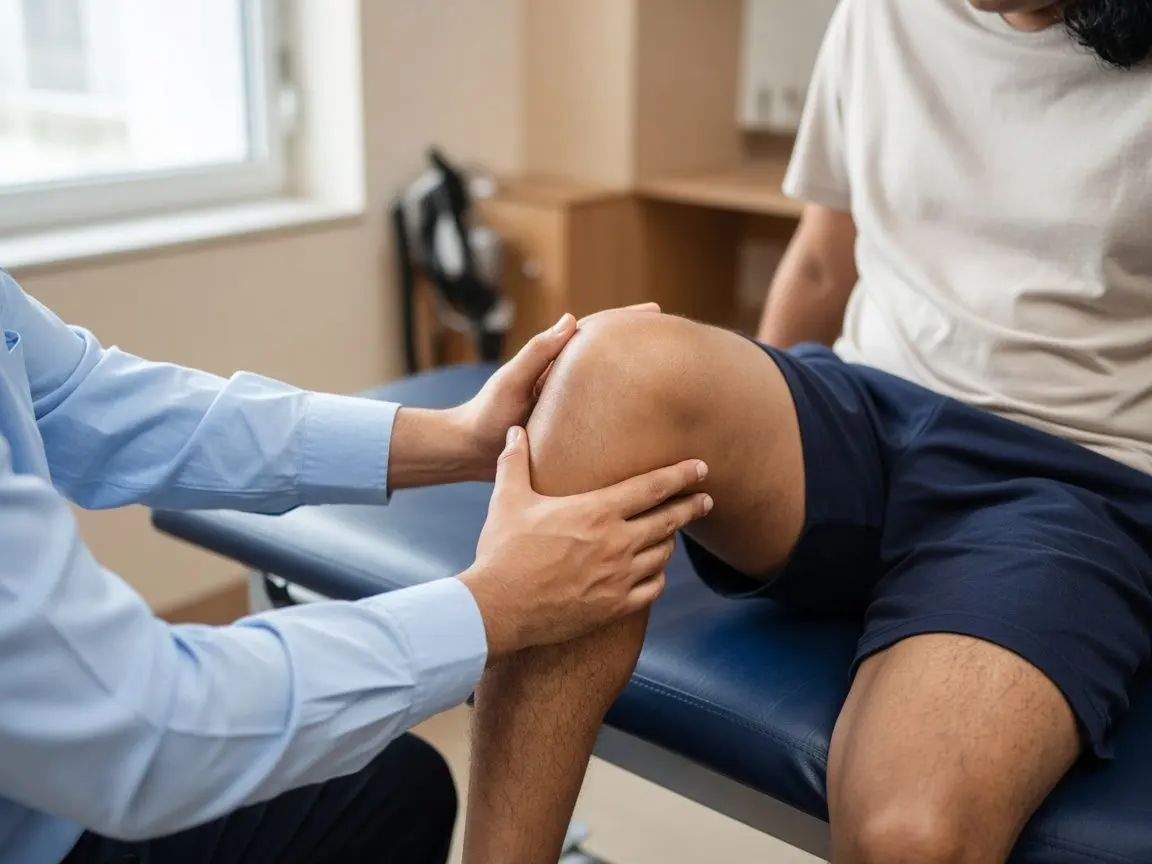
The meniscus is the shock-absorbing cartilage between the thigh and shin bones. Some tears are repaired with sutures so the rim can heal. Some are trimmed. Some are left alone and treated with physiotherapy. The choice is made from the examination and the MRI, not from the word tear.
Symptoms, causes, who it may help
Symptoms
- Catching, clicking, or a knee that locks.
- Joint-line pain after a twist.
- Swelling the day after sport.
Causes
- A twist in a young knee, or wear in an older one.
Who it may help
- Repair is preferred when the tear is in a part that has blood supply and the tissue will hold a stitch.
- A degenerative tear in an arthritic knee is often not a reason to operate.
How it is assessed
- exam
- Joint-line tenderness and specific rotation tests.
- xray
- To see arthritis, which changes the advice.
- mri
- Shows the tear pattern. A reported tear is not an instruction to operate.
- clinic
- You should leave knowing whether the plan is rest, physiotherapy, repair, or a trim.
Treatment options
| Option | Without surgery | With surgery |
|---|---|---|
| Right for many degenerative tears. | No operation. | |
| Review if locking or giving way appears. | ||
| Still needs a recovery that protects the stitch. | Sutures through the arthroscope. | |
| Not the default. | Only the unstable fragment is removed. | |
The procedure, step by step
- 01
Portals
Two or three small openings. A camera and fine instruments.
- 02
Decide on the tear
Seeing it can change the MRI plan. You are told what was done.
- 03
Repair or trim
Stitches if it can heal. A limited trim if it cannot.
- 04
Protect
A repair often limits bending and weight for a period. A trim usually moves sooner.
Recovery roadmap
You can: Home, ice, and the weight rule written for your tear.
Avoid: Guessing that every meniscus operation has the same rules.
Do, do not, and when to call
Do
- Follow the weight-bearing note on your discharge paper.
- Ask whether yours was a repair or a trim. The recovery is not the same.
Do not
- Do not squat fully because a friend with a trim could.
Call the clinic
- Fever, a wound that opens, or pus.
- Calf pain and swelling, chest pain, or sudden breathlessness.
- A leg or arm that becomes numb, cold, or impossible to move.
- Pain that is far beyond the plan you were given.
Risks and honest expectations
- Infection, bleeding, clots, stiffness, and anaesthesia reactions are possible with any operation.
- A good result still needs physiotherapy. The operation is one part of the recovery.
- A repair can fail to heal and later need a trim. A trim can leave the knee more prone to wear.
The aim is a knee that does not lock, with as much meniscus kept as possible.
See it
Knee arthroscopy in the operating theatre.
Questions
No. Many degenerative tears are treated without an operation.